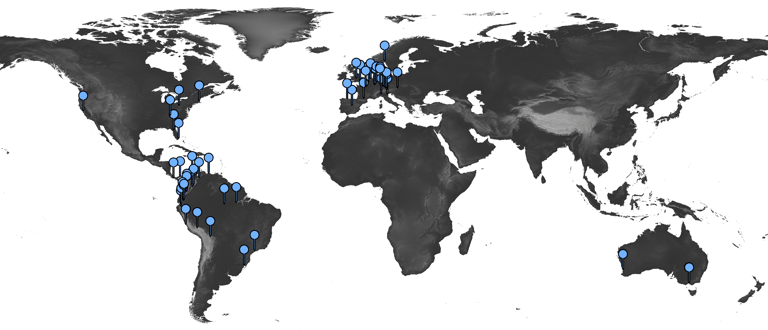
Global Collaborators
Research Output and Topics
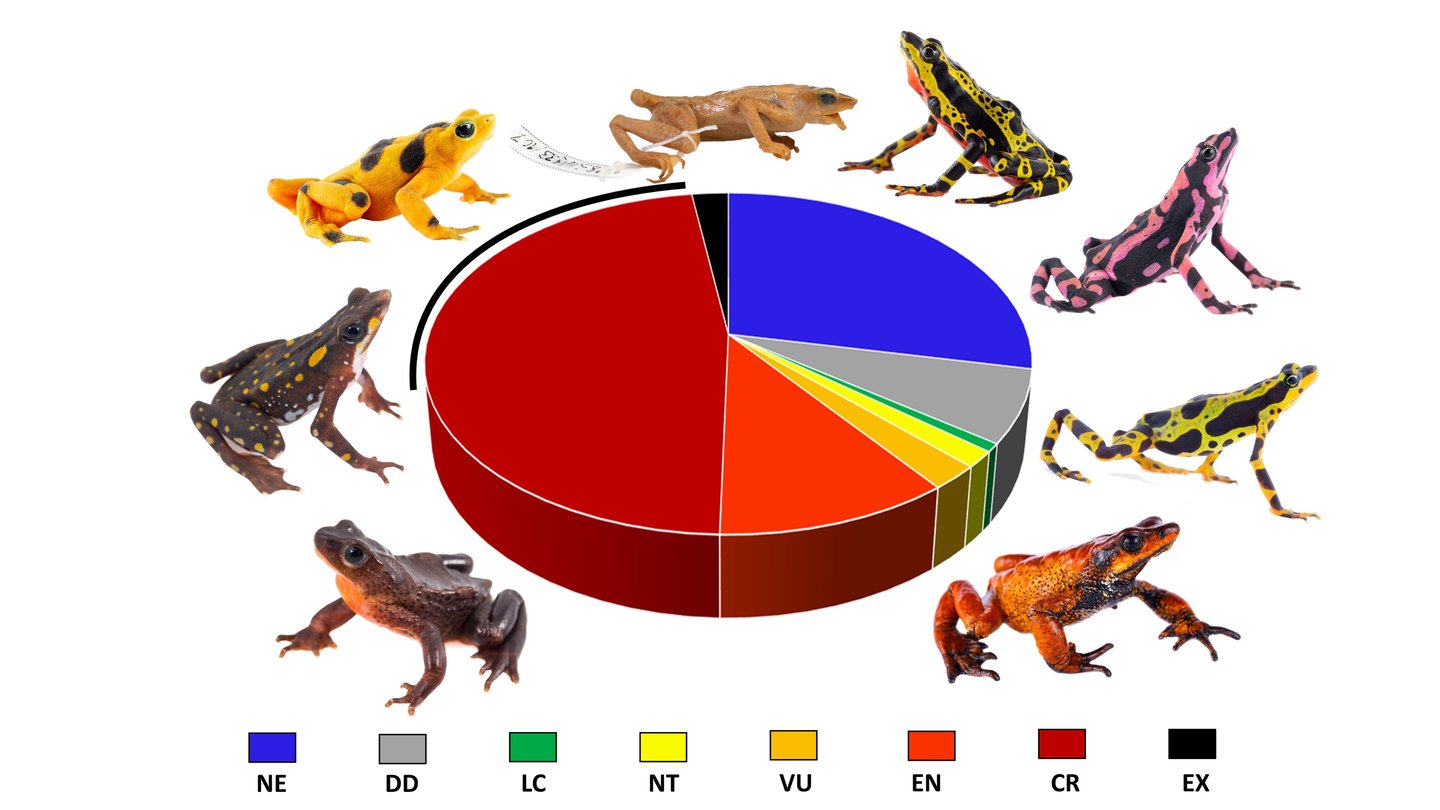
Amphibians are the world's most threatened vertebrate class today. The 'amphibian extinction crisis' is multifactorial, and habitat loss, climate change, but also emerging infectious diseases are among the main drivers.
Global amphibian declines are scattered unequally across space and the amphibian tree-of-life. I´m mostly focussing the Neotropics, a global epicentre of declines.
In a recent paper in Communications Earth and Environment, we use harlequin toads (Atelopus) – the global face of the amphibian extinction crisis – and show that despite the hope from numerous rediscoveries, population declines remain an emergency.
For my work on amphibian diseases, which is intrinsically linked to the global amphibian extinction crisis, please see the next paragraph!
Amphibian Declines
Central Research Topics
From: Lötters, Plewnia et al. (2023) Communications Earth & Environment
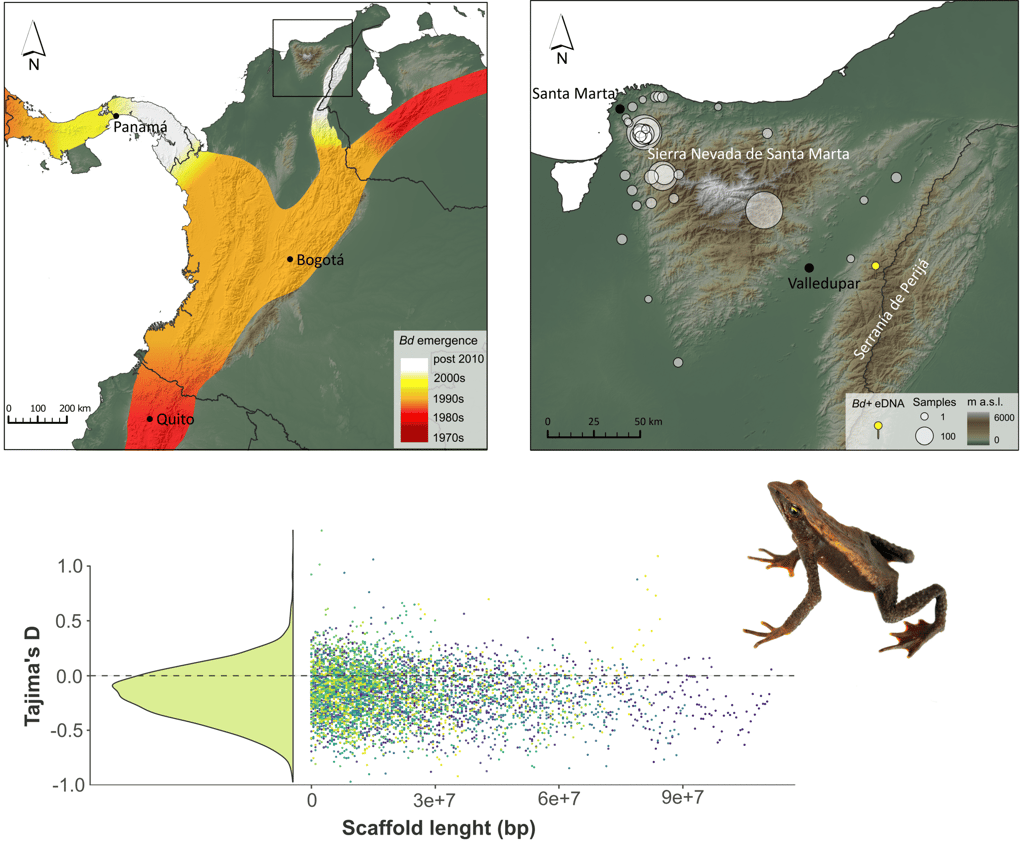
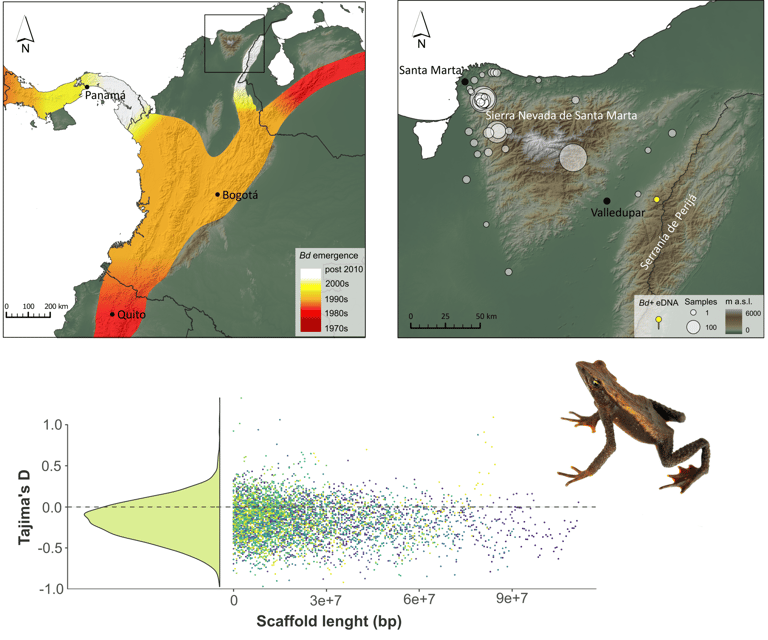
Amphibian chytrid fungi represent the world's most impactful wildlife pathogens, having caused extreme biodiversity loss all around the globe. Still, policymakers, and even conservation leaders often seem to neglect such wildlife-only diseases as we highlighted in a recent letter in Science.
In a recent study in Current Biology, we discovered what appears to be the last chytridiomycosis-free refuge for the Neotropics – the Sierra Nevada de Santa Marta, an isolated mountain range in northernmost Colombia that is home to numerous endemic amphibians. This raises hope for Neotropical amphibian conservation, but also introduces massive mitigation challenges for protecting this refuge. We combined intense surveillance, genomic typing of adjacent pathogen lineages, niche modelling, population genomic profiling and ultimately lab infection experiments to generate a holistic picture on how threatened this unique amphibian biodiversity hotspote might be.
Currently, I am working on the genomic and ecological diversity of Bd in the tropical Andes – a global epicentre of Bd-driven declines. Here I am trying to uncover the co-evolutionary background of amphibian persistence with Bd.
Besides studying the impact and dynamics of Bd in the Neotropics, I am also interested in Bsal – a pathogen eroding salamander diversity in front of my doorstep in central Europe. In recent publications, we have reviewed the status in Germany, developed the first temperature-independent treatment, and assessed its impact on some of Europe's most emblematic newts and salamanders.
Besides chytrid fungi, I am also actively working on Bufonid Herpesvirus (BfHV1, see our recent synthesis in Scientific Reports here) and the crayfish plague (Aphanomyces astaci, see our recent work in the Journal of Fish Diseases here).
Disease Ecology
From: Plewnia et al. (2026) Current Biology (under review)
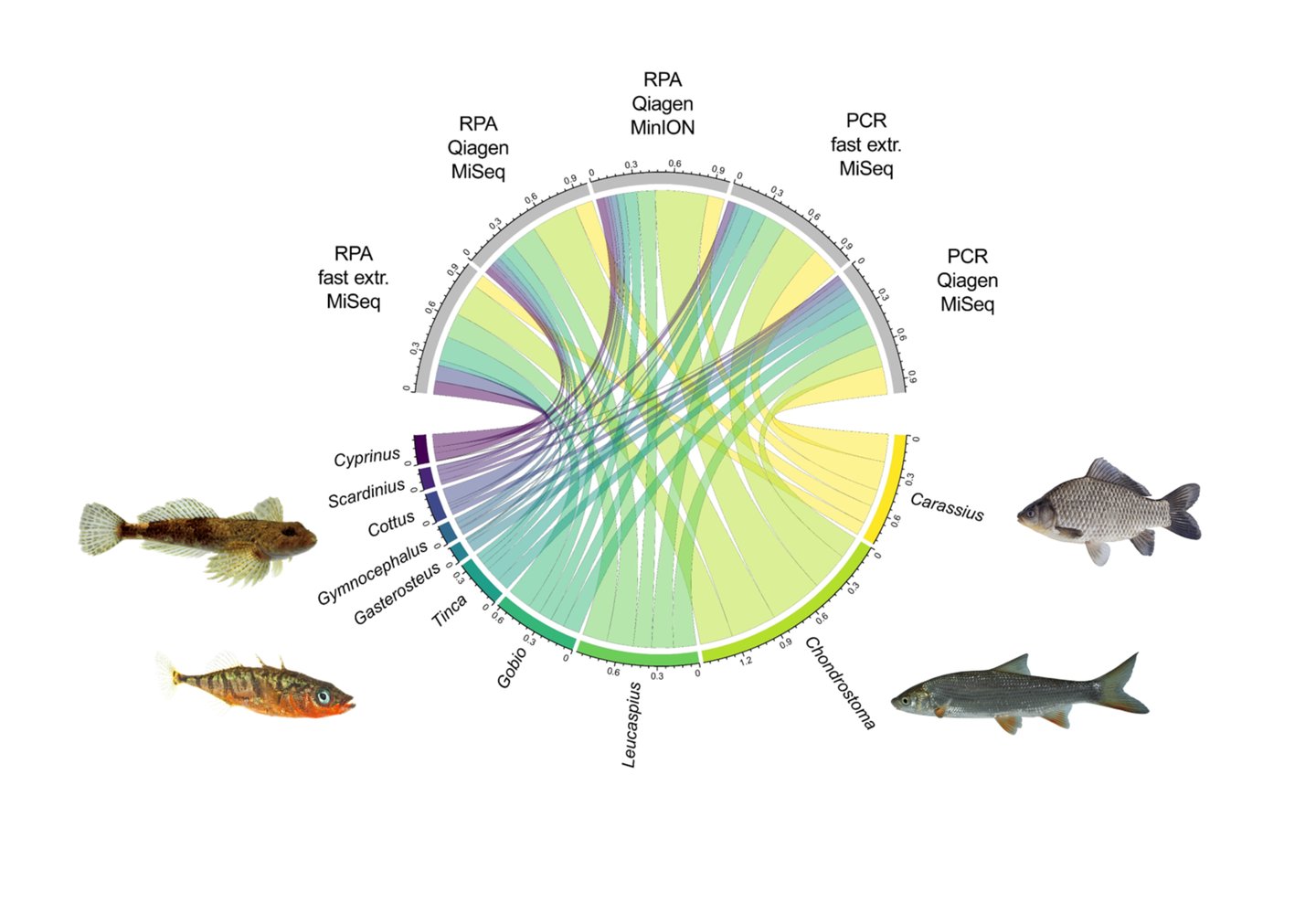
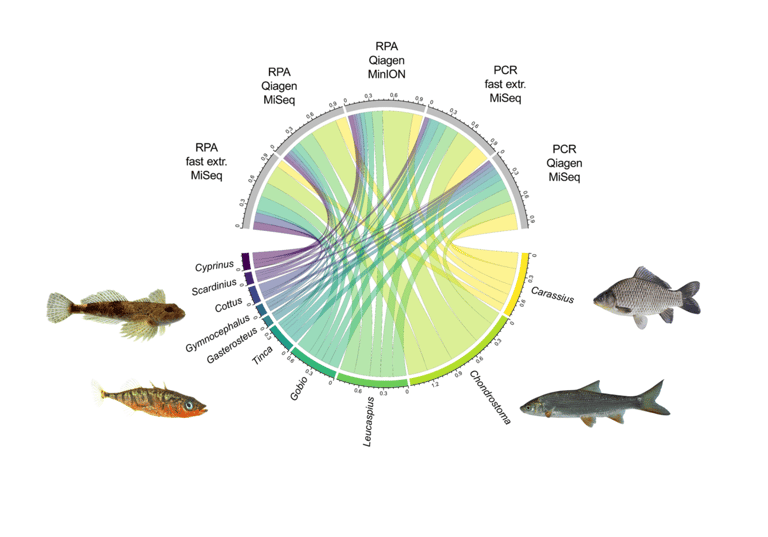
Most of my eDNA-linked research has focussed on developing novel methods that democratize eDNA metabarcoding by making tools simpler, more cost-efficient, faster, and even field-deployable. In 2025, we discovered how to use isothermal amplification for construction of metabarcoding libraries (published in this study in Methods in Ecology and Evolution). We combined this technique with Nanopore sequencing in the field, and later developed a bioinformatic workflow that integrates rapid barcoding of reference specimens with the analysis of eDNA Nanopore data (published in this study in Molecular Ecology Resources).
eDNA can not just be detected from water or soil, but genetic traces of entire biota are also found in the air! In a recent study published in Environmental DNA, we developed a simplified sampling technique for airborne eDNA, recovering hundreds of species from cloud forest air in Colombia and Ecuador.
In a recent study published in Scientific Reports, we employed eDNA metabarcoding on large scale across the Ecuadorian Andes – leading to the rediscovery and new discovery of numerous populations of critically endangered and even some thought to be extinct amphibian species! An exciting and promising gamechanger for amphibian conservation in the region, that we are planning to expand on in future collaborations.
Environmental DNA
From: Plewnia et al. (2025) Methods in Ecology & Evolution
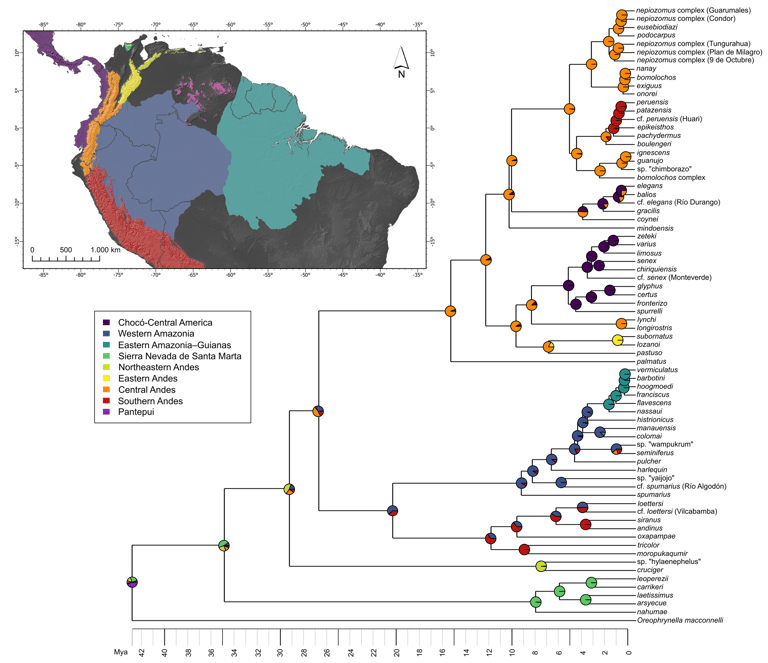
The patterns and drivers of immense global biodiversity has inspired research for centuries. I have always been fascinated by the diversity patterns in the tropical Andes, Amazonia, and adjacent regions, where terrestrial species richness peaks.
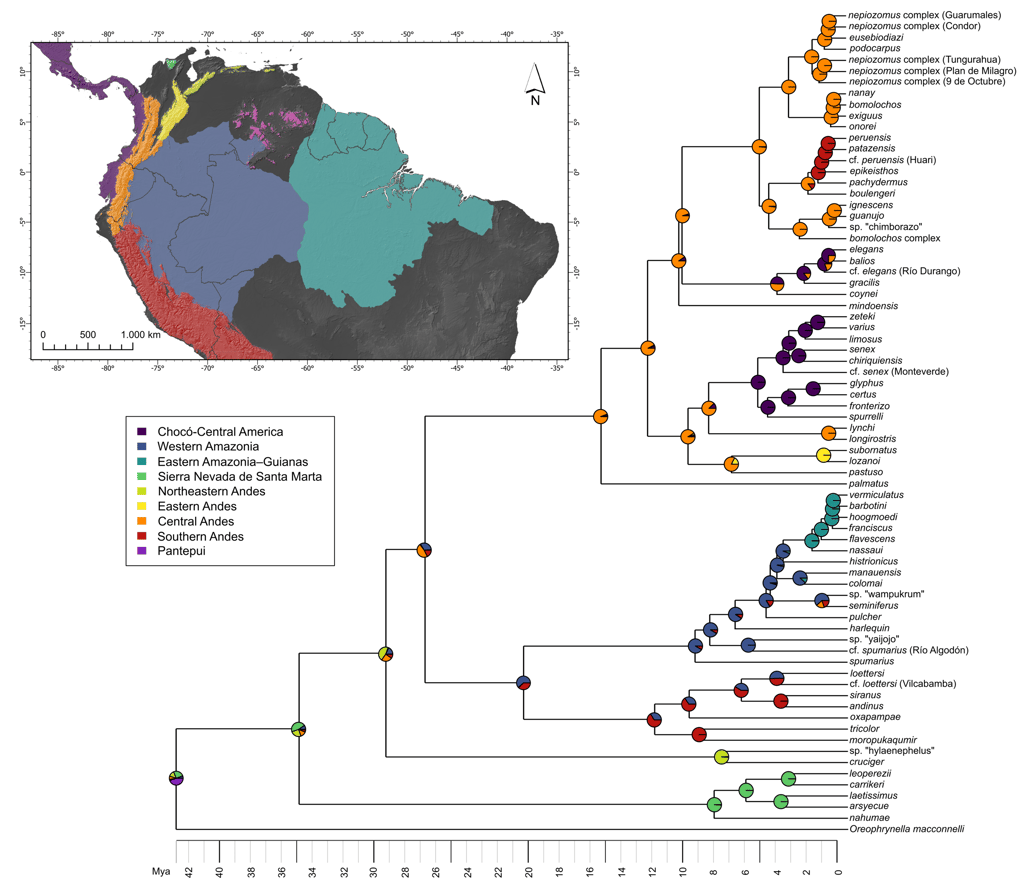
In a recent study (under review in Ecography), we combined complete mitogenomes and museomics data to generate the most complete harlequin toad phylogeny. This species-rich, and evolutionarily old group has diversified all across northern South America and adjacent central America, telling us more about ancient diversification patterns of amphibians and their link with the Neotropical geomorphology.
Ongoing work focusses on a genomic perspective on dispersal and diversification in the Amazon basin and Guiana shield.
Biogeography & Evolution
From: Plewnia et al. (2026) Ecography (under review)
The basis of any action to protect or study biodiversity is documenting global patterns of species richness, distribution, and most centrally, the species themselves.
Collection-based research and species descriptions and revisions are therefore more important than ever.
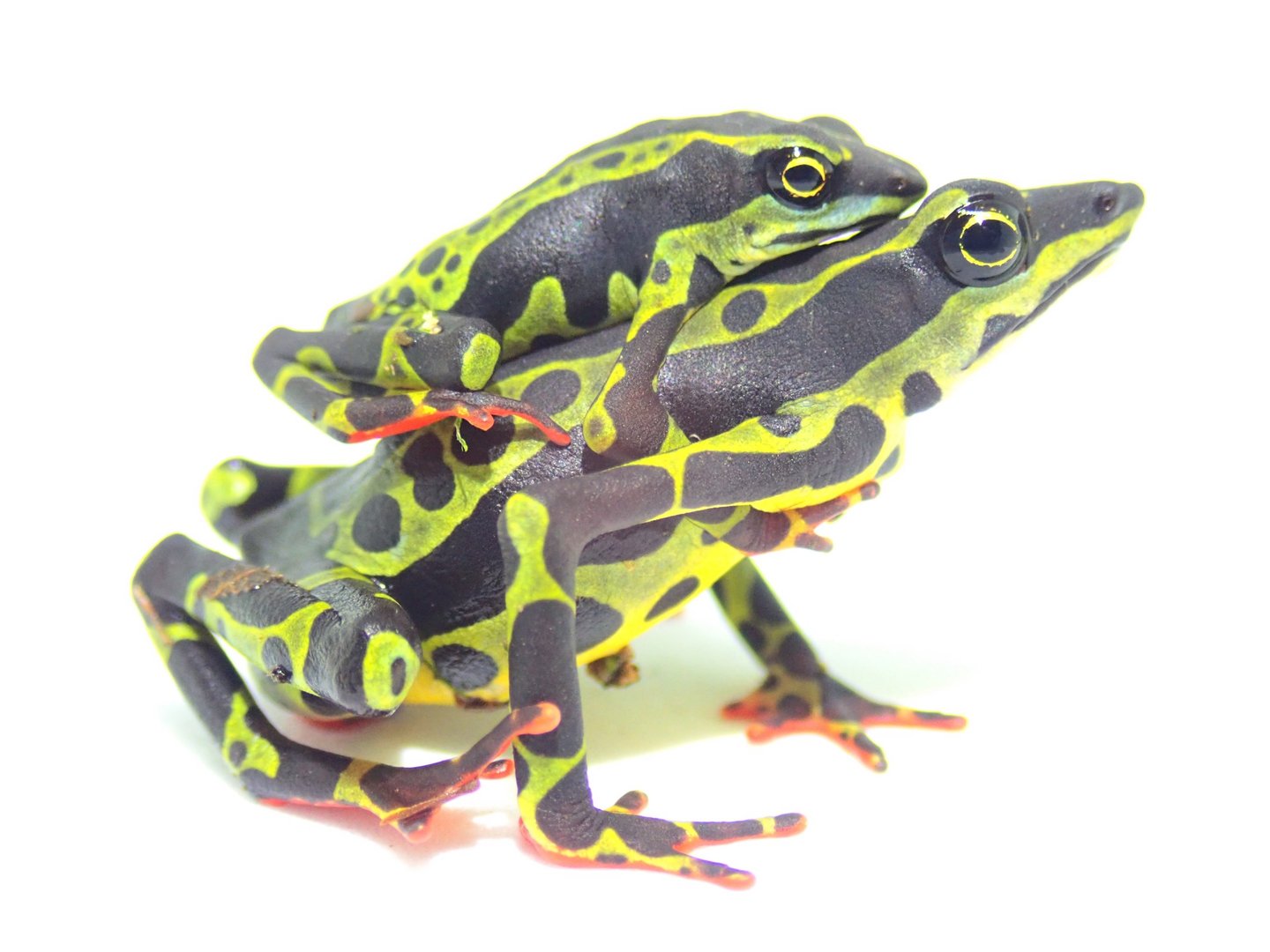
Neotropical bufonids have always been at the core of my interests, and I had the opportunity to describe 6 species new to science (Atelopus calima, A. colomai, A. guacharo, A. harlequin, A. histrionicus, Rhinella kuka), and redescribed additional taxa. Ongoing work is going beyond bufonids, and includes both species-level and higher taxonomy of anurans and salamanders across Amazonia, the tropical Andes and the Colombian Sierra Nevada.
I believe that taxonomy is best being studied with integrative toolsets. My research has built on a combination of molecular genetics and genomics (including museomics), bioacoustics, adult and larval morphology, and internal structures using Synchrotron imaging, as exemplified by this publication in Salamandra and this monograph in Zootaxa.
Systematics & Taxonomy
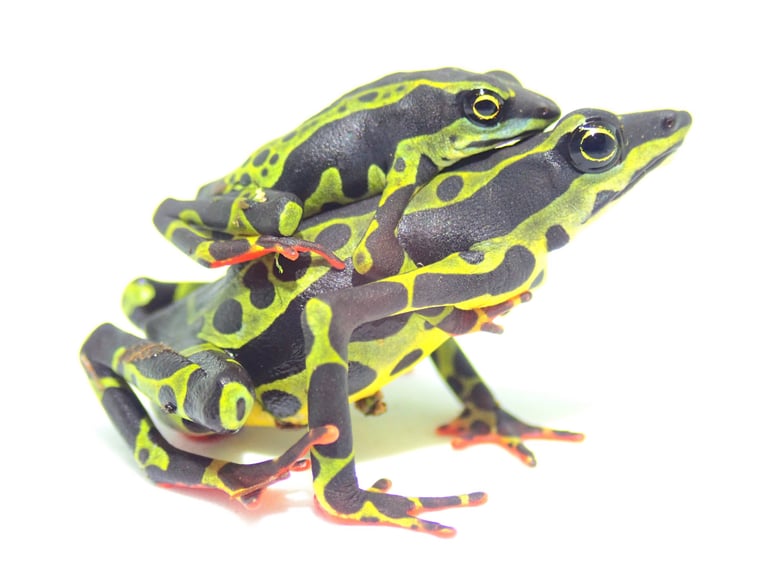
Atelopus colomai, described in Plewnia et al. (2024) Salamandra
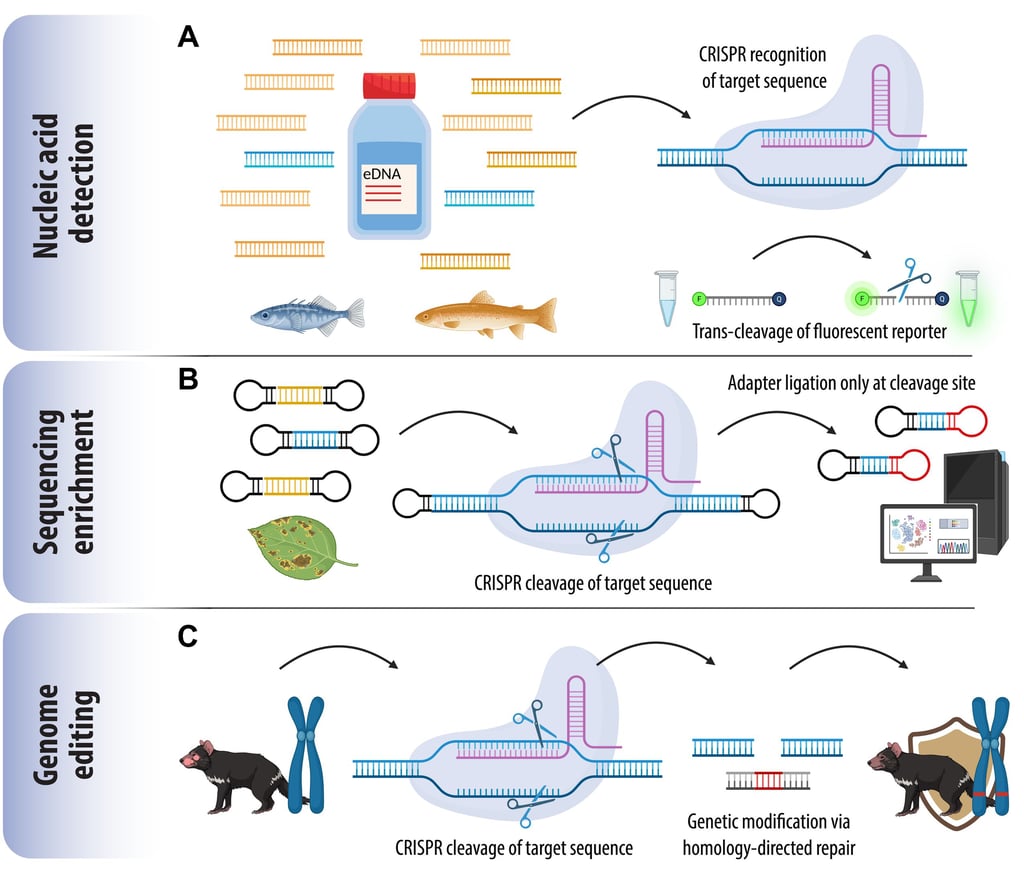
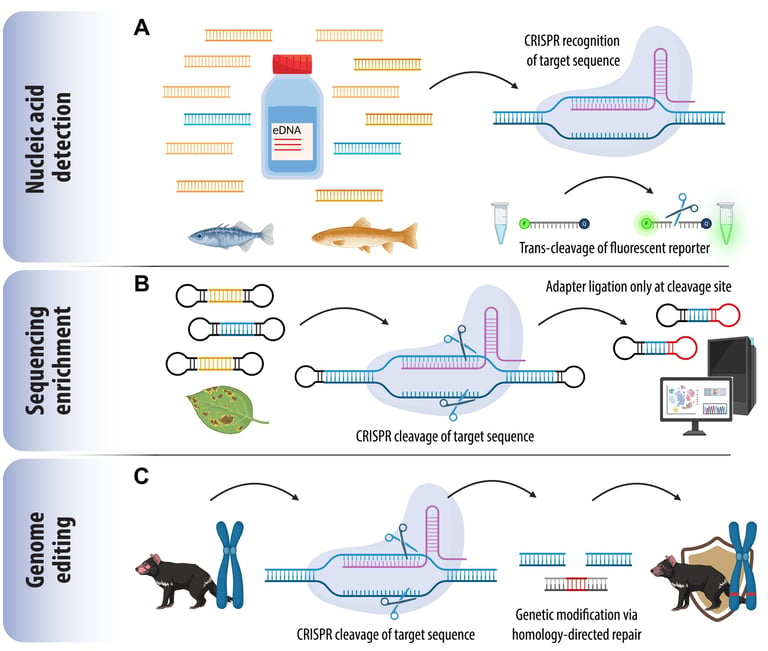
Most people might think of genome editing and the associated controversial debates when hearing about CRISPR-Cas.
But CRISPR-Cas nucleases can do way more than just editing the genetic code! As an ecologists who is always seeking for new methods that simplify biodiversity monitoring and disease detection – to make it accessible to the real conservation heros in the field, CRISPR nucleases offer a unique array of tools. From rapid species detection (e.g. pathogens from a skin swab, or target species from eDNA) to targeted sequencing, CRISPR-diagnostics are currently revolutioinizing molecular ecology.
In a recent review in Molecular Ecology Resources, we talk about the late but multifacetted CRISPR revolution in ecology. My first interaction with the 'CRISPR-world' was the establishment of a rapid assay for the salamander chytrid fungus Bsal (published in this paper in EcoHealth). Many more (yet unpublished) assays have followed since, exploring different nucleases and multiplexing for eDNA detection in less than an hour in the field. We also just made exciting progress on using Cas12a for precise removal of undesired sequences in eDNA, strongly reducing the necessary sequencing depth (and cost!) to detect the actual target species.
CRISPR
From: Plewnia et al. (2026) Molecular Ecology Resources
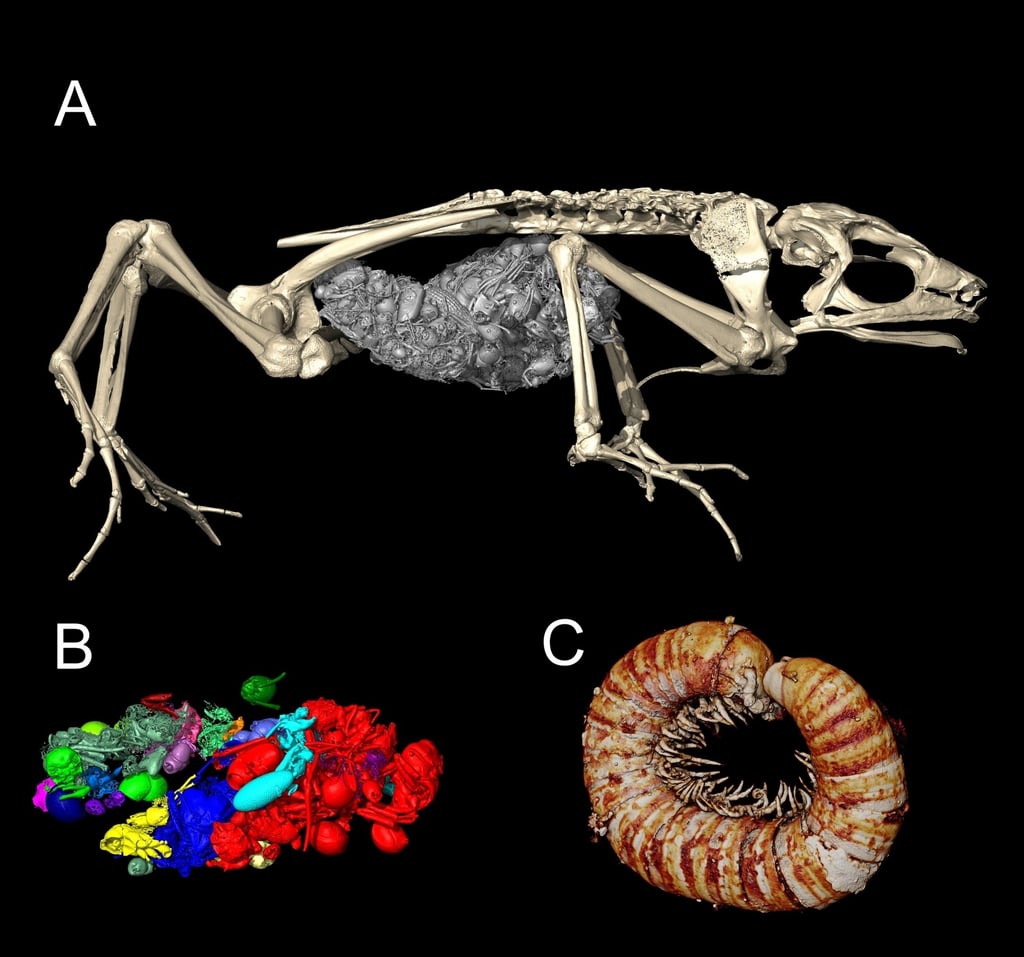
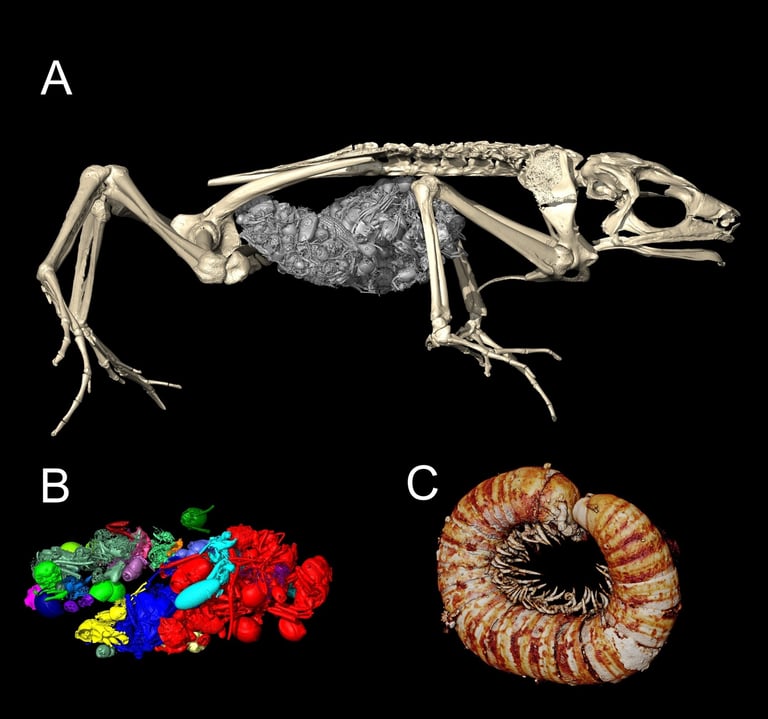
Biodiversity collections are treasures for uncovering information on long-lost or threatened species. While much of my collection-based research is either linked to Taxonomy (see above) or Biogeography & Evolution (see above), the latest generation of imaging platforms also allows us to dive into functional morphology and natural history.
We have used Synchrotron imaging to recover high-resolution data on soft internal tissues of decades-old preserved type specimens. In a recent publication in the Journal of Vertebrate Biology, we combine this dataset with metabarcoding of living amphibians to learn what harlequin toads eat in the wild. Visualizing stomach content of decades-old type specimens is not just exciting, it will also directly inform ongoing ex situ conservation activities!
'Next-generation' Anatomy
From: Plewnia et al. (2026) Journal of Vertebrate Biology
amadeus.plewnia[AT]t-online.de
Wildlife Health Ghent - Faculty of Veterinary Sciences
Salisburylaan 133, 9820, Merelbeke
Belgium
Habitats Conservation
Luxembourg | Belgium | Germany
© 2025. All rights reserved.